Derek Haffar
Casting with depleted mycelium blocks:
Platonic Solids using depleted spawn blocks from local mushroom farmers. Use blue oyster mushrooms for quickest results.
You will need:
Chipboard/cardboard
Clear packing tape
Olfa knife
Mycelium spawn
Used coffee grounds
A bin or other mixing container that will contain a whole block broken up, a five-gallon bucket works well.
A spray bottle for misting as you go, pouring water directly on the material soaks rather than dampens.
Used coffee grounds: I have had a hard time keeping up with just my personal use so I have been buying cheap coffee grounds and boiling them with plenty of water, what I call sheepherder coffee, and this has been working well.
1) Wash your hands, so no gloves are necessary. This is to protect the Mycelium.
2) Break up the Mycelium block and mist generously with water. Remove any mushroom fruit as this will decay and cause rot/mold, even the small growth. Best to stick to the interior of the blck and discard most of the crust.

3) Add used coffee grounds, they should be thoroughly moist before adding. If you are using fresh coffee grounds mist generously.
4) Mix thoroughly. 2-3 cups of used coffee grounds is plenty for an average block. The whole mixture should take on a distinct coffee smell overpowering the mushroom smell
5) Pack the Mycelium/coffee mixture into you mold form. I use chipboard for these forms but you must be aware that if you do not seal the interior with clear packing tape/duct tape or equivalent the Myceliun will attach itself and you will n ot be able to demold your forms!

6) Place in a plastic bag after misting generously, allowing for some amount of air exchange.
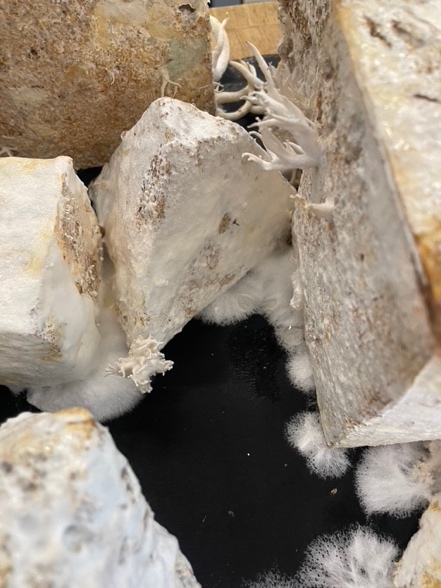
7) Mist everyday for two weeks, do not let it dry out. Store in a warm dark space. You will see that the Mycelium finds it’s way out of the mold forms and goes looking for its friends.
The white fuzz is called Hyphae and should not be mistaken for mold. If mold should appear you will recognize it as a dark or greenish presence. If this occurs you need to disc discard everything and start fresh! Clean and sterilize.
8) The forms will need to dry for some time after you decide to stop the growth. You may remove the chipboard form after two weeks and still let it grow in its plastic tent. This will increase its integrity as a form. It can grow like this for weeks or months but I typically run this whole process in 4 weeks.
All mushrooms are magic!
Derek